October 7th Tragedy – Timeline

Chronology of October 7th, 2023

This timeline documents the events of October 7th, 2023, as they unfolded hour by hour. In one devastating day, nearly 1,200 lives were lost, over 250 people were taken hostage, and thousands were left injured, traumatized, and displaced.

Content Warning

The following timeline contains descriptions of violence and traumatic events that may be distressing. Reader discretion is advised.

Jump to Time:
06:00 AM 06:30 AM 07:15 AM 07:30 AM 08:30 AM 09:00 AM 10:45 AM 12:00 PM 02:30 PM 05:00 PM 08:00 PM 11:59 PM
1
06:00 AM Border Breach
Gaza Border Southern Communities

Before dawn's first light, terrorists tore through the Gaza fence, pouring across fields with gunfire and rockets, plunging border communities into chaos. Families awakened to shattering windows and the roar of engines as the calm of the night was ripped away.
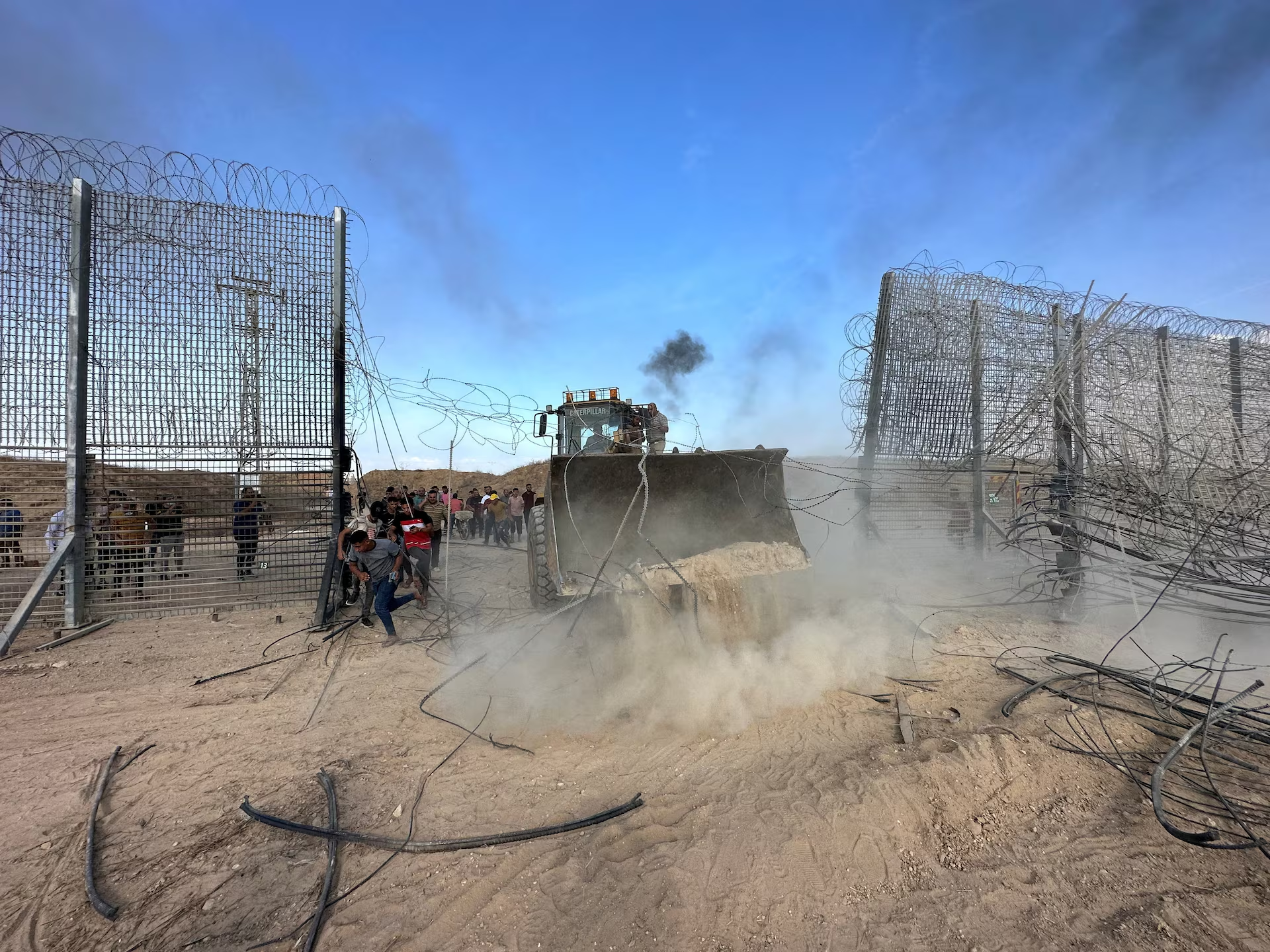
Smoke rising as terrorists breach Israel's southern fence
Smoke rises as terrorists breach the southern border fence. Photo: Reuters/Ashraf Amra

In Kibbutz Be'eri, Nahal Oz, and Kerem Shalom, families were torn from their slumber by deafening blasts and the staccato rattle of gunfire. Parents raced to sealed safe rooms clutching children; neighbors banged on doors, warning of the onslaught.

By the time the first sirens finally cut through the chaos, the tranquil dawn had been transformed into a scene of terror and disbelief—an indelible scar on the morning's calm.

2
06:30 AM Initial Alerts
Multiple Communities

The Red Alert warning system activated across dozens of southern communities as rockets streamed from Gaza. Emergency services began receiving distressed calls reporting gunfire and explosions in communities near the border.

Security forces, initially responding to what they believed was a routine rocket attack, quickly realized the unprecedented nature of the assault as reports of armed infiltrators flooded emergency channels. The scope of the attack became apparent as multiple breach points were identified along the border fence.

Military units began mobilizing, but the scale and coordination of the attack created confusion and delayed response times. Civilians in affected areas were instructed to remain in sheltered spaces and lock their doors.

3
07:15 AM First Responders Mobilize
Southern Region

Uniformed medics and volunteers, hearts pounding, darted through debris-strewn streets; their sirens mingled with cries for help as they fought against time to reach the wounded.

Emergency medical teams mobilized from across the country, with ambulances racing toward the south despite the immense danger. Many first responders would later discover they were driving directly into active combat zones.

Emergency medical teams tending to wounded
Medical teams providing emergency care under difficult conditions. Photo: Magen David Adom

Communication networks became overwhelmed as thousands attempted to contact loved ones and emergency services simultaneously. Many responders lost contact with dispatch centers, forcing them to make life-or-death decisions without guidance or backup.

4
07:30 AM Kibbutz Be'eri Overrun
Be'eri

By sunrise, the tranquil lanes of Kibbutz Be'eri had become a killing ground. Terrorists moved methodically through the community, targeting homes where families had sought shelter.

Ruined home in Kibbutz Be'eri after the attack
Ruins of a house destroyed during the Be'eri assault. Source: Washington Post/Alamy

Residents barricaded themselves in safe rooms as attackers moved door to door. Some families remained hidden for hours, communicating only by whispered messages on phones with rapidly draining batteries. Parents struggled to keep young children quiet as terrorists searched for hidden residents.

The kibbutz security team, vastly outnumbered, fought to protect their community until reinforcements could arrive. Many died defending their neighbors and loved ones.

Over 100 residents of Be'eri would lose their lives by the end of the day, making it one of the hardest-hit communities in the attack.

5
08:30 AM Widespread Attacks
Multiple Locations

Echoes of gunfire reverberated across kibbutzim and farmhouses. Parents pressed children to their chests in darkness, praying for dawn to bring safety rather than more heartbreak.

By this time, the attacks had spread to multiple communities, the Nova music festival, and military outposts. The full scale of the coordinated assault became apparent as reports flooded in from numerous locations simultaneously.

Military reinforcements began arriving at some communities, but the widespread nature of the attacks meant many areas remained vulnerable. Helicopters that attempted to evacuate wounded residents came under fire, complicating rescue efforts.

6
09:00 AM Hospital Crisis
Soroka Medical Center Barzilai Hospital

Hospital corridors overflowed with bloodied stretchers and tear-streaked faces. Doctors worked without pause, their white coats stained crimson, each breath a prayer for another life saved.

Southern hospitals began implementing mass casualty protocols as the wounded arrived by ambulance, helicopter, and private vehicles. Operating rooms ran continuously as medical staff worked through overwhelming numbers of severely injured patients.

Medical staff treating wounded at Soroka Medical Center
Medical teams at Soroka Medical Center treating multiple casualties. Photo: Times of Israel

Additional medical personnel were called in from across the country, with many doctors and nurses arriving voluntarily after seeing news reports. Blood banks issued emergency appeals for donations as supplies ran critically low.

Amidst the medical crisis, hospitals also had to contend with security concerns as family members desperately searched for loved ones and security teams remained vigilant against potential infiltrators targeting medical facilities.

7
10:45 AM Government Response
Jerusalem Tel Aviv

In Jerusalem's corridors of power, leaders convened under the weight of grief. Faces around the table bore the sorrow of a nation, resolving to stand firm amidst despair.

The Israeli government declared a state of emergency and officially announced the country was at war. Reserve units were mobilized on a massive scale, with thousands of soldiers receiving emergency call-up notices.

Crisis management centers activated across government ministries to coordinate the civilian response, including evacuation plans for communities near the Gaza border and emergency housing solutions for displaced residents.

International allies were briefed on the situation as diplomatic channels opened to secure support. Search and rescue teams from several countries began preparations to assist with recovery efforts.

8
12:00 PM National Emergency
Nationwide

A national emergency swept the land. Streets fell silent as shops shuttered, communities united in a collective hush—a shared heartbeat echoing loss and solidarity.

The Home Front Command issued nationwide safety instructions, with schools closed and public gatherings canceled. The country's airspace was restricted, with many international flights either canceled or diverted.

Empty streets in Tel Aviv during the national emergency
Normally busy streets in Tel Aviv remained empty as the nation responded to the crisis. Photo: Getty Images

Citizens across Israel mobilized to support affected communities. Blood donation centers reported lines stretching for blocks, and collection points for emergency supplies appeared in cities nationwide.

By noon, the true scale of the tragedy was becoming apparent, though the full count of casualties and hostages would not be known for days. Many families still had no word from loved ones in the affected areas.

9
02:30 PM Aid Mobilization
Southern Region

Aid trucks rumbled south, carrying blankets, water, and hope. Each delivery brought tears of relief as strangers became family in the crucible of compassion.

Convoys of emergency supplies from government agencies, NGOs, and private citizens began reaching staging areas near affected communities. Military escorts protected aid vehicles as they navigated through areas still not fully secured.

Temporary shelters expanded capacity as the number of displaced persons grew. Hotels across central and northern Israel opened doors to evacuees, many offering free accommodation.

Trauma specialists and mental health professionals mobilized to provide immediate psychological support to survivors, first responders, and families of victims.

10
05:00 PM Mass Evacuations
Border Communities

Evacuation caravans wound through dusty plains; grandparents clasped grandchildren's hands, leaving behind ruins for the promise of shelter and safety.

As military forces secured additional communities, organized evacuations began for all residents within range of Gaza. Convoy after convoy of buses, military vehicles, and private cars moved people northward to safety.

Evacuation convoy leaving southern communities
Families evacuate from border communities under military escort. Photo: IDF Spokesperson's Unit

Many evacuees left with only the clothes they were wearing, having spent hours in safe rooms without the opportunity to pack belongings. Children carried favorite toys while adults carried the weight of uncertainty about whether they would ever return to their homes.

Special evacuation operations were arranged for elderly and disabled residents, though some refused to leave despite the dangers. Emergency workers faced difficult decisions about those too injured to move or communities still under threat.

11
08:00 PM Nightfall
Southern Region

Lanterns flickered in the gathering dusk, guiding weary souls along silent roads. Soldiers and civilians shared quiet moments of kindness beneath a bruised sky.

As darkness fell, military operations intensified to secure remaining areas and rescue those still trapped. Night vision equipment and flares illuminated the continuing efforts to reach every home and shelter.

Search and rescue teams continued their grim task of recovering victims, while ZAKA volunteers worked to ensure proper treatment of the dead according to Jewish tradition.

The nation held its breath as the first lists of confirmed casualties began to circulate, along with growing concerns about those taken hostage into Gaza. Families gathered at designated centers seeking information about missing loved ones.

12
11:59 PM Day's End
Nationwide

Across Israel, candles glowed in windows and courtyards. In that gentle luminescence, a fragile vow was born: to remember, to mourn, and to rebuild.

As the first day of the crisis drew to a close, the full extent of the tragedy remained unknown. Families across the nation waited for news, hoping against hope that missing loved ones would be found alive.

Memorial candles lit in Tel Aviv
Spontaneous memorial with candles appeared in cities across Israel. Photo: Reuters

Emergency services continued working through the night, even as the country began to comprehend the scale of what had occurred. Hospitals remained on high alert, treating the wounded and preparing for more arrivals.

Across social media and news broadcasts, stories of heroism emerged alongside the horror—accounts of civilians who protected neighbors, first responders who ran toward danger, and communities that came together in the darkest of times.

As midnight approached, a nation forever changed began to face the reality of a new day—one that would bring both mourning and the difficult path of healing and resilience.

A Day That Changed a Nation

October 7th, 2023 marked a profound turning point in Israeli history. The events of this single day left scars both visible and invisible—in communities destroyed, families torn apart, and a collective national trauma that continues to reverberate.

Yet amid the darkest moments emerged extraordinary courage, compassion, and resilience. Neighbors risked their lives for one another. Strangers opened their homes to those displaced. First responders worked beyond exhaustion to save lives. These acts of humanity remind us that even in our most vulnerable moments, the human spirit endures.

This timeline serves as both documentation and memorial—a commitment to remember those lost, honor those who survived, and ensure that their stories are told for generations to come.

The Aftermath: October 2023 - December 2025

The October 7th attacks sparked a conflict that would last over two years. This extended timeline documents the major developments, including the hostage crisis, military operations, humanitarian efforts, and the eventual path to resolution.

13
OCT 8-27, 2023 War Declaration & Initial Operations
Israel & Gaza

In the days following the attacks, Israel formally declared war and began mobilizing reserves on a massive scale. The IDF launched Operation Iron Swords, initiating air strikes on Gaza while continuing to secure border communities and assess the full scope of the tragedy.

As the nation mourned, families began the agonizing wait for news of the 251 hostages taken to Gaza. Emergency hotlines were established for families seeking information, and the Hostages and Missing Families Forum was formed to advocate for the captives' return.

14
NOV 24-30, 2023 First Hostage Release Agreement
Gaza

After weeks of intensive negotiations mediated by Qatar and Egypt, Israel and Hamas reached a ceasefire agreement on November 21, 2023. The deal called for a four-day pause in fighting, later extended to seven days, allowing for the release of hostages in exchange for Palestinian prisoners.

By November 30, 2023, 105 civilian hostages had been released—81 Israelis, 23 Thai nationals, and 1 Filipino. The releases brought moments of joy tinged with anguish, as families reunited with loved ones while 146 hostages remained in captivity. The scenes of mothers embracing children and elderly hostages returning home moved the world, yet the celebration was incomplete.

15
FEBRUARY-AUGUST 2024 Rescue Operations
Gaza Strip

February 12, 2024: In a daring nighttime raid in Rafah, IDF forces rescued two hostages with dual Israeli-Argentinian citizenship: Fernando Simon Marman, 60, and Louis Har, 70, who had been kidnapped from Kibbutz Nir Yitzhak. The operation, involving special forces and coordinated airstrikes, demonstrated Israel's commitment to bringing every hostage home.

June 8, 2024: In one of the most complex rescue operations of the war, Israeli forces freed four hostages from the Nuseirat refugee camp in central Gaza: Noa Argamani (26), Almog Meir Jan (21), Andrey Kozlov, and Shlomi Ziv. The operation required months of intelligence gathering and precise coordination.

August 27, 2024: The IDF rescued Farhan Al-Qadi, a 52-year-old father of 11 from the Bedouin community in southern Israel, from the southern Gaza Strip. Each rescue operation brought renewed hope to families still waiting.

Throughout 2024, the conflict continued with military operations in various parts of Gaza, including the Rafah offensive beginning in May and operations around Khan Yunis. The humanitarian situation in Gaza deteriorated severely, with over 42,000 Palestinian casualties reported by October 2024.

16
JULY-DECEMBER 2024 Regional Escalation
Lebanon & Syria

The conflict expanded beyond Gaza as tensions with Hezbollah in Lebanon escalated into full-scale fighting. On July 31, Hamas political leader Ismail Haniyeh was assassinated in Tehran. On October 1, Iran fired approximately 200 missiles at Israel, marking a dangerous regional escalation.

By late 2024, Israeli forces had entered southern Lebanon following months of cross-border exchanges with Hezbollah. A ceasefire in Lebanon was eventually reached, though tensions remained high. The crisis also contributed to the fall of the Assad regime in Syria and subsequent Israeli operations in Syrian territory.

17
JANUARY 15-19, 2025 Major Ceasefire Agreement
Gaza

After months of intensive mediation led by Qatar, Egypt, and the United States, a comprehensive ceasefire agreement was announced on January 15, 2025. The deal, structured in multiple phases, called for an immediate cessation of military operations, Israeli withdrawal from heavily populated areas, and the release of hostages.

On January 19, 2025, the first group of three Israeli women walked free, followed by waves of releases over subsequent weeks. By mid-February, 30 hostages had been released as part of the January 2025 ceasefire. On February 15, three more hostages—Russian-Israeli Alexander Troufanov, Argentinian-Israeli Yair Horn, and American-Israeli Sagui Dekel-Chen—returned after 498 days in captivity.

18
OCTOBER 13, 2025 The Final Homecoming
Gaza-Israel Border

After 736 days—two years and one week—the last chapter of the hostage crisis came to a close. On October 13, 2025, as part of the Gaza peace plan, the final 20 living hostages crossed from Gaza into Israel, ending the longest and most agonizing hostage crisis in Israeli history.

The scene at the border was one of overwhelming emotion: families who had campaigned tirelessly for over two years finally embraced their loved ones. Medical teams stood ready, trauma specialists waited to provide support, and a nation collectively exhaled a breath it had been holding since that terrible morning in October 2023.

Final count: 168 hostages returned alive to Israel—105 released in November 2023, five released by Hamas outside formal agreements, eight rescued by the IDF, 30 released in the January 2025 ceasefire, and 20 released under the peace plan.

Tragically, 84 hostages perished—killed either during the initial October 7 attacks or during their time in captivity. As of December 2025, only one body remains in Gaza: Master Sgt. Ran Gvili, who fell defending Kibbutz Alumim on October 7, 2023.

19
DECEMBER 2025 Reflection and Renewal
Israel

More than two years after October 7, 2023, Israel continues the difficult process of healing and rebuilding. Thousands of evacuees from border communities work to return to their homes, though many communities remain damaged or under reconstruction. Mental health services continue to provide support to survivors, families of victims, and first responders who carry the weight of what they witnessed.

The national trauma remains fresh, yet signs of resilience emerge: memorial sites honor the fallen, support groups bring together those who shared the darkest days, and communities slowly rebuild. The promise to never forget—to remember every name, every story, every life—remains steadfast.

As the nation moves forward, the lessons of October 7th remain etched in collective memory: the fragility of peace, the strength found in unity, and the enduring human capacity for both cruelty and compassion.

Looking Forward, Never Forgetting

The events that began on October 7, 2023, fundamentally changed Israel and reverberated across the world. From the initial horror of the attacks through the agonizing years of the hostage crisis to the eventual return of the survivors, this period tested the limits of human endurance and revealed the depths of both suffering and strength.

This memorial stands as a permanent testament to all who were affected: the 1,200 killed on that terrible day, the 84 hostages who did not return, the 168 who survived captivity, the thousands wounded and displaced, and the millions who watched, waited, and worked for their return.

May their stories never be forgotten. May their sacrifices lead to lasting peace. And may we always remember that behind every number is a name, behind every name is a person, and behind every person is a family forever changed.